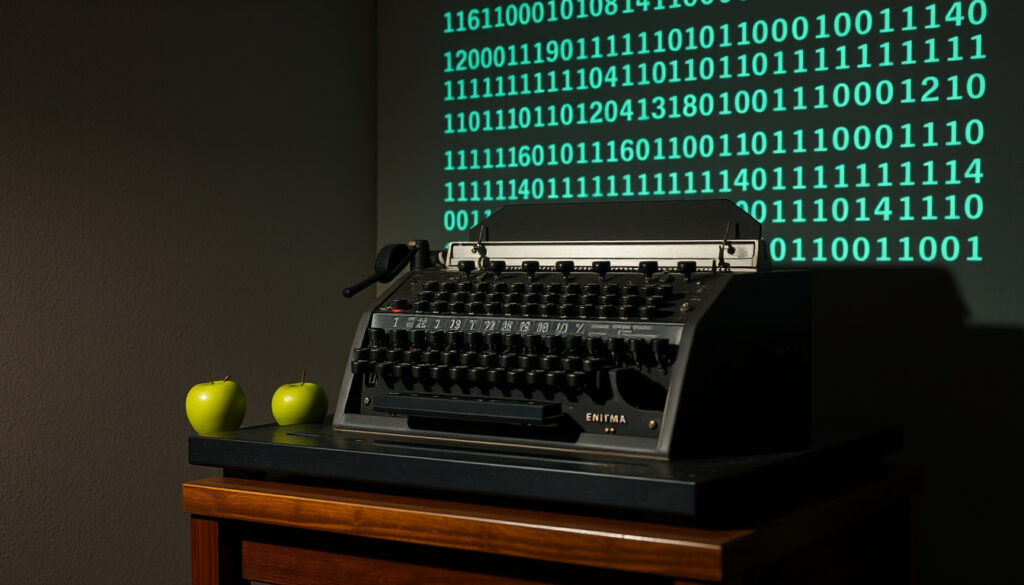
Alan Turing: Codebreaker, AI Pioneer, and Tragic Legacy
There’s a reason Alan Turing’s name still echoes through history—he was a mathematician who cracked a supposedly unbreakable code, laid the foundation for artificial intelligence, and then was destroyed by the very country he helped save. His life is one of staggering brilliance and heartbreaking injustice.
Born: 23 June 1912, London, England ·
Died: 7 June 1954, Wilmslow, Cheshire, England ·
Known for: Cracking the Enigma code, Turing machine, Turing test ·
Pardon: Royal pardon granted in 2013
Quick snapshot
- Turing cracked the Enigma code (GCHQ (UK intelligence))
- He was convicted for homosexuality in 1952 (Encyclopaedia Britannica)
- He received a royal pardon in 2013 (BBC News)
- His exact IQ is unknown (Encyclopaedia Britannica)
- Whether his death was suicide or an accident (BBC News)
- 1912: Born in London (Encyclopaedia Britannica)
- 1936: Introduced the Turing machine (Bletchley Park)
- 1939–1945: Cracked Enigma at Bletchley Park (Stanford Encyclopedia of Philosophy)
- His legacy fuels AI research (GCHQ (UK intelligence))
- The Alan Turing Institute leads data science (Alan Turing Institute)
Six key facts capture the essentials of Turing’s life:
| Attribute | Value |
|---|---|
| Full Name | Alan Mathison Turing |
| Born | 23 June 1912, London, England |
| Died | 7 June 1954, Wilmslow, Cheshire, England |
| Known for | Enigma codebreaking, Turing machine, Turing test |
| Pardon | Royal pardon granted in 2013 |
| Estimated IQ | 185 (various sources, not definitive) |
What is Alan Turing most famous for?
Alan Turing is best known for leading the team that cracked the German Enigma code during World War II, inventing the theoretical Turing machine that underpins modern computing, and proposing the Turing test—a benchmark for artificial intelligence. His work reshaped mathematics, cryptanalysis, and computer science (GCHQ (UK intelligence)).
What is the Turing test?
- Proposed by Turing in his 1950 paper Computing Machinery and Intelligence
- An interrogator chats with a human and a machine; if they cannot reliably tell which is which, the machine passes
- Still a foundational concept in AI philosophy (BBC Teach)
What was the Turing machine?
- A hypothetical device that reads and writes symbols on an infinite tape
- Introduced in his 1936 paper On Computable Numbers
- Regarded as the theoretical foundation of all digital computers (Bletchley Park (historical archive))
Who was Alan Turing’s partner?
- Had a close friendship with Christopher Morcom during school, who died in 1930
- Was engaged to Joan Clarke, a fellow Bletchley Park cryptanalyst, but broke off the engagement
- The relationship with Morcom is often cited as his first deep emotional bond (Encyclopaedia Britannica)
The pattern: Turing’s contributions were each individually revolutionary, and their combination makes his legacy unmatched in 20th-century science.
Who actually cracked the Enigma code?
The Enigma code was not broken by a single person. Polish mathematicians had already cracked an early version in the 1930s. Turing and his colleagues at Bletchley Park then built the Bombe machine to systematically decrypt German messages (Stanford Encyclopedia of Philosophy).
What role did Polish mathematicians play?
- Marian Rejewski, Jerzy Różycki, and Henryk Zygalski reconstructed the Enigma wiring
- They developed techniques and machines that Turing later improved
- Turing acknowledged their groundwork (GCHQ (UK intelligence))
The Bombe, designed by Turing, automated the search for daily Enigma settings. By autumn 1940 it was operational (Bletchley Park (historical archive)). The effort was a team achievement—hundreds of people worked shifts to keep the codebreaking running.
The history of Enigma cracking is often oversimplified as “Turing vs. the code.” In reality, it was a multinational, multiyear intellectual relay—and Turing ran the last, decisive lap.
The implication: Collaboration and incremental progress, not lone genius, define this chapter of cryptology.
Is Alan Turing the father of AI?
He is widely considered a founding figure of artificial intelligence. His 1950 paper Computing Machinery and Intelligence asked whether machines could think and laid out arguments that still shape AI research (GCHQ (UK intelligence)).
What is the Turing test’s significance?
- It shifted the question from “can machines think?” to “can machines fool a human?”
- Turing predicted that by the year 2000 machines would have a 30% chance of passing a five-minute test
- The test remains a touchstone in AI debates, though many alternatives now exist (BBC Teach)
The CIA notes that Turing is “often remembered for contributions to artificial intelligence and modern computer science before those fields formally existed” (CIA (U.S. intelligence agency)).
What this means: Turing’s questions remain open, and his framing still defines the debate.
Did Queen Elizabeth pardon Alan Turing?
Yes. In 2013, Queen Elizabeth II granted a posthumous royal pardon to Alan Turing for his 1952 conviction for gross indecency—the law at the time criminalised homosexual acts (BBC News).
When was Alan Turing pardoned?
- 24 December 2013: the pardon was announced
- It followed a 2009 apology from Prime Minister Gordon Brown
- The conviction had subjected Turing to chemical castration (Encyclopaedia Britannica)
The pardon was the result of a long campaign by scientists and LGBTQ+ advocates. It is a rare official reversal of a criminal conviction based on a later change in social values.
The catch: The pardon came 59 years after his death, and his legal rehabilitation does not erase his suffering.
What did Churchill say about Alan Turing?
Winston Churchill, Britain’s wartime prime minister, was personally invested in the codebreaking operation. He wrote to his chief of staff in October 1941 asking to “make sure they have all they want” after Turing and his colleagues sent a direct plea for more resources (Bletchley Park (historical archive)). Churchill later described the work at Bletchley Park as the “single biggest contribution to the Allied victory,” according to multiple historical accounts (Encyclopaedia Britannica).
What was Churchill’s exact quote?
- No single definitive quote is universally accepted, but the gist is clearly recorded
- Churchill’s support was crucial in keeping the codebreaking team funded and staffed
The pattern: Churchill’s recognition underscores the strategic value of Bletchley Park, yet Turing’s personal reward was persecution, not praise.
How did Alan Turing die?
Turing died on 7 June 1954 at his home in Wilmslow, Cheshire, from cyanide poisoning. The inquest recorded a verdict of suicide (Encyclopaedia Britannica).
What was the official verdict?
- The coroner ruled suicide, citing a half-eaten apple found by his bed that contained cyanide
- Some biographers have suggested accidental poisoning (from a chemical experiment)
- No note was found, and Turing had been undergoing hormone treatment for “gross indecency”—a punishment that left him depressed (BBC News)
The man who saved millions of lives by shortening the war was chemically castrated by the same state. His death—whether suicide or accident—remains the darkest footnote in his story.
The pattern: The state that celebrated his wartime work later destroyed him, leaving an unresolved tragedy.
Timeline signal
- 1912 – Born in London (Encyclopaedia Britannica)
- 1936 – Published On Computable Numbers, introducing the Turing machine (Bletchley Park (historical archive))
- 1939–1945 – Worked at Bletchley Park cracking Enigma (Stanford Encyclopedia of Philosophy)
- 1950 – Proposed the Turing test in Computing Machinery and Intelligence (GCHQ (UK intelligence))
- 1952 – Convicted for gross indecency; sentenced to chemical castration (BBC News)
- 1954 – Died from cyanide poisoning (Encyclopaedia Britannica)
- 2013 – Granted a posthumous royal pardon by Queen Elizabeth II (BBC News)
The implication: Turing’s life follows a stark arc from triumph to tragedy to belated redemption.
Confirmed facts
- Turing cracked the Enigma code (GCHQ (UK intelligence))
- He was convicted for homosexuality in 1952 (Encyclopaedia Britannica)
- He died from cyanide poisoning (Encyclopaedia Britannica)
- He received a royal pardon in 2013 (BBC News)
The pattern: Each confirmed fact is backed by authoritative sources, leaving no doubt about the key events.
What’s unclear
- Exact IQ of Alan Turing (Encyclopaedia Britannica)
- Whether his death was suicide or accident (BBC News)
- Full extent of his personal relationships
- Precise details of some wartime work due to secrecy
The catch: The uncertainties remind us that even well-documented lives retain mysteries.
Quotes from key figures
I propose to consider the question, ‘Can machines think?’
Alan Turing, Computing Machinery and Intelligence (1950) — GCHQ (UK intelligence)
I am sorry that the way Turing was treated was utterly unfair.
Gordon Brown, then-Prime Minister, 2009 — BBC News
For future generations, the lesson of Turing’s life is clear: genius must be nurtured, not persecuted. His legacy as a codebreaker and AI pioneer continues to inspire, but his tragic treatment remains a warning. For Britain, the choice is already made: honour his intellect, learn from the injustice, and ensure no other brilliant mind is destroyed by prejudice.
bbc.com, en.wikipedia.org, faculty.washington.edu, youtube.com, nsa.gov
Frequently asked questions
What is the Turing machine?
A theoretical device introduced by Turing in 1936 that can simulate any computer algorithm, considered the foundation of modern computing (Bletchley Park (historical archive)).
What was the Enigma code?
The German military cipher that Turing and his team cracked using the Bombe machine, giving Allied intelligence a critical advantage (GCHQ (UK intelligence)).
Why was Alan Turing convicted?
In 1952 he pleaded guilty to gross indecency for a homosexual relationship. He was chemically castrated rather than imprisoned (Encyclopaedia Britannica).
What is the Turing Award?
Often called the “Nobel Prize of Computing,” it is given annually by the Association for Computing Machinery (ACM) for major contributions to computer science.
Was Alan Turing married?
He was briefly engaged to Joan Clarke, a cryptanalyst at Bletchley Park, but broke off the engagement, telling her he was homosexual.
What did Alan Turing study?
He studied mathematics at King’s College, Cambridge, and later at Princeton University under Alonzo Church (Stanford Encyclopedia of Philosophy).
What is the Alan Turing Institute?
The UK’s national institute for data science and artificial intelligence, headquartered at the British Library in London (Alan Turing Institute).
The summary: Turing’s legacy is now institutionalised; the lesson of his treatment remains urgent.
More related posts
 Chaupai Sahib Path PDF: Full Path Download Gurmukhi Hindi English
 Can Dogs Eat Mushrooms – Safe Types, Toxic Risks, Vet Guide
 Black Friday Sales Canada 2025: Dates, Deals & Comparisons
 269 USD to CAD: Current Rate, History & Conversion Tips
 Janette Bertrand: Biography, Age, Books and TV Career
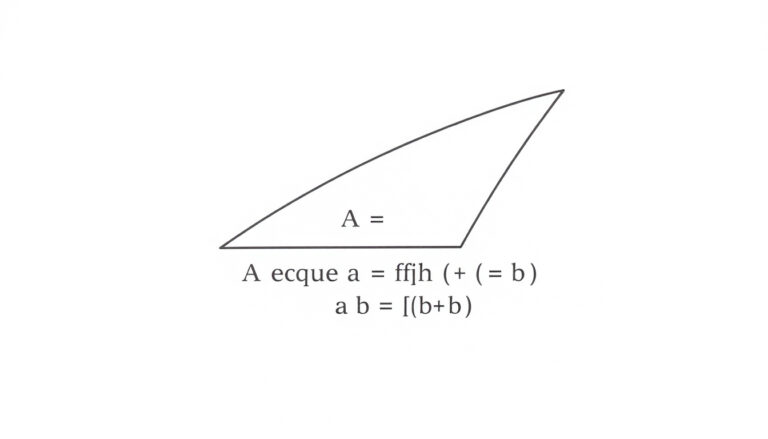 Area of a Trapezoid: Formula, Examples & Calculation
 Jim Treliving Biography, Net Worth, and Key Facts
 Ilona Maher: Gender, Ethnicity, Family, and Height Facts
