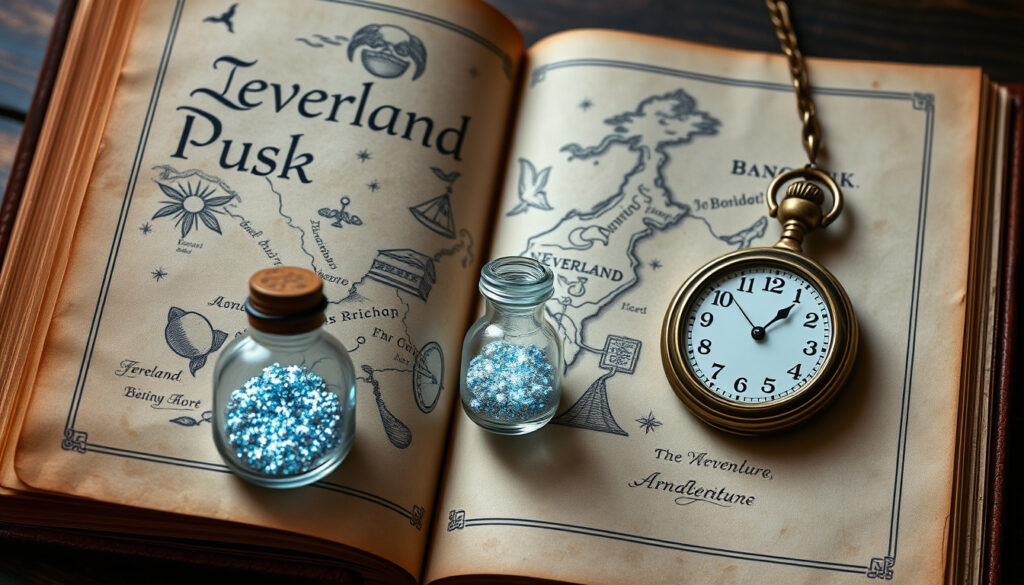
Peter Pan and Wendy: Their Relationship, Ending & Age Guide
Few fictional relationships spark as much debate as Peter Pan and Wendy Darling’s. While J.M. Barrie’s original novel presents a maternal bond, Disney’s adaptations have layered in romantic subtext that persisted into the 2023 live-action film.
First publication: 1904 (play) / 1911 (novel) · Disney animated film release: 1953 · 2023 Disney live-action release: 2023 (streaming on Disney+) · Age rating (2023 film): PG (parental guidance) · Original author: J. M. Barrie
Quick snapshot
- Barrie’s original text presents a platonic, maternal relationship (Wikipedia – encyclopedia).
- Peter never marries Wendy in any canonical version (Mark L Lockwood – relationship analysis).
- Whether the 2023 film fully eliminates all romantic subtext is open to interpretation (Common Sense Media – age‑rating guide).
- The exact age recommendation for sensitive 8‑year‑olds remains subjective (Common Sense Media – parental guide).
- 1904 – play premieres; 1911 – novel “Peter and Wendy”; 1953 – Disney animated film; 2023 – Disney live‑action film (Britannica – story overview).
- Continued pop‑culture analysis of the “Wendy syndrome” concept in modern relationships (Psychology Today – clinical psychology outlet).
Five key facts, one pattern: across every version the core dynamic remains a mismatch between Wendy’s desire for connection and Peter’s refusal to grow up.
| Fact | Detail |
|---|---|
| Premise | Wendy and her brothers fly to Neverland with Peter Pan. |
| Key theme | The refusal to grow up vs. the necessity of maturity. |
| Relationship core | Wendy offers domestic and motherly care; Peter offers freedom and adventure. |
| Romantic conclusion | No married ending; Peter remains a child; Wendy grows up. |
| Wendy syndrome | A term derived from the character, describing caretaker behavior toward a partner who avoids adulthood. |
What is the relationship between Peter Pan and Wendy?
Platonic friendship vs. romantic overtones
In J. M. Barrie’s 1911 novel Peter and Wendy, the bond is explicitly platonic. Wendy sews, tells stories, and tucks the Lost Boys into bed—she functions as a mother substitute. Peter, who “crows like a cock” and is described as “a beautiful boy, clad in skeleton leaves,” shows no romantic interest (Wikipedia – novel summary). The Disney 1953 film, however, introduces romantic subtext through songs like “You Can Fly” and scenes where Wendy kisses Peter, creating an implied attraction that the original never intended (IMDb – 1953 film entry).
Wendy offers domestic stability; Peter offers adventure. Neither can give the other what they truly want—Wendy wants love and permanence, Peter wants eternal childhood. This mismatch drives the entire story.
Wendy’s role as a mother figure
Barrie makes the mother-daughter dynamic explicit: Wendy tells the Lost Boys, “I will be your mother,” and Peter later says, “You are not my mother, you are a dear girl.” Wendy’s attachment is maternal, not romantic.
A 1982 paper in the Australian and New Zealand Journal of Psychiatry described this as the “Peter Pan and Wendy syndrome,” where a narcissistic husband (Peter) is enabled by a depressed, nurturing wife (Wendy) (PubMed – psychiatric research).
The implication: Wendy’s caregiving is mistaken for romance by later adaptors, but the original material firmly frames it as a child’s fantasy of having a mother.
Why didn’t Peter end up with Wendy?
Peter’s refusal to grow up
Peter Pan’s identity is built on the refusal to become an adult. “I don’t want to be a man,” he tells Wendy. Barrie writes that Peter “would not grow up” because he wants to stay a “little boy” forever (Mark L Lockwood – literary analysis). Marriage and fatherhood are adult responsibilities, so Peter rejects them outright.
In the 1953 Disney film, Peter promises to return for spring cleaning—a commitment that suggests a future—but in the novel he simply forgets Wendy and moves on to the next girl.
Wendy’s return to the real world
After the adventures, Wendy chooses to go home and eventually grows up. In the novel she marries a man named Edward (never named directly in the play) and has a daughter, Jane. Barrie writes: “You see, Wendy had grown up. You need not be sorry for her. She was one of the kind that like to grow up.” (Wikipedia – novel ending)
Thematic ending: Wendy’s growth is portrayed as natural, not a loss. Peter remains in Neverland, eternally separate.
Did Wendy and Peter Pan fall in love?
Wendy’s feelings for Peter
Wendy does develop a crush. In the novel she asks Peter directly, “What are your exact feelings for me?” and he replies, “Those of a devoted son.” Wendy is hurt, but Barrie makes clear that Peter’s emotional capacity is childlike—he can’t love in the adult sense (PsyArt Journal – psychoanalytic reading).
Psychoanalytic readings view Peter as Wendy’s “animus”—a projected masculine ideal, not a real love interest. One scholar notes that Peter represents “the irrepressible energy of childhood,” which by definition cannot pair with an adult romantic partner (PsyArt Journal – Jungian analysis). Where Disney added a kiss, Barrie added a thimble—a symbol of platonic affection.
The catch: Wendy’s love is real, but Peter cannot return it. The story is about unrequited infatuation, not mutual love.
What is the true ending of Peter Pan?
Ending in the 1904 play
The original play ends with Wendy and her brothers returning home, and the Lost Boys being adopted by the Darlings. Peter refuses to stay because he doesn’t want to grow up. He returns to Neverland.
Ending in the 1911 novel
The novel adds a poignant epilogue: years later, Peter flies back to the Darling house to find Wendy grown up with a daughter, Jane. He takes Jane to Neverland for spring cleaning, and the cycle continues. “I want my mother,” Jane says—repeating the maternal pattern (Wikipedia – novel conclusion).
Ending in the 1953 Disney film
Disney ends with Wendy and her brothers sailing home, Peter vowing to return for spring cleaning. The romantic subtext is left unresolved—no marriage, no explicit goodbye.
Ending in the 2023 live-action film
The 2023 film Peter Pan & Wendy (directed by David Lowery) ends with Wendy choosing to return home and eventually becoming a doctor—a career that gives her agency. Peter and Wendy part as friends, with a handshake instead of a kiss. The film deliberately removes romantic tension in favor of mutual respect (Common Sense Media – review). For more on the relationship between Peter Pan and Wendy, check out Coraline Tim Burton Netflix věk.
The pattern: Peter’s eternal childhood and Wendy’s necessary growth remain unchanged across adaptations.
Are Peter Pan and Wendy appropriate for 8 year olds?
Content warnings in the 2023 film
The 2023 live‑action film is rated PG for “action/peril, violence, and scary images.” Common Sense Media notes that pirate sword fights, a crocodile attack, and emotional scenes (including a mother’s grief) may disturb children under 8 (Common Sense Media – parental guide).
Comparison with the 1953 animated film
The 1953 film is rated G and generally considered safe for all ages, though it contains outdated cultural stereotypes (e.g., the song “What Makes the Red Man Red”). Some parents prefer to skip or explain those scenes.
One pattern, two outcomes: the 2023 version is more intense and emotionally complex; the 1953 version is lighter but dated. Parents should preview both.
| Aspect | 1953 Animated Film | 2023 Live‑Action Film |
|---|---|---|
| Rating | G | PG |
| Violence | Mild slapstick | Realistic pirate fights, peril |
| Emotional intensity | Low | Moderate (loss, grief) |
| Outdated stereotypes | Yes (Native American portrayal) | No (re‑imagined) |
| Romantic subtext | Implied | Minimal (friendship focus) |
Upsides
- 2023 film offers a modern, inclusive take.
- 1953 film is easier for sensitive children.
Downsides
- 2023 film has stronger scary scenes.
- 1953 film carries outdated stereotypes.
What is Wendy syndrome?
Psychological concept origins
The term “Wendy syndrome” was popularized by Dr. Dan Kiley in his 1983 book The Peter Pan Syndrome. It describes a person (often a woman) who enables a partner with Peter Pan syndrome—someone who avoids adult responsibilities. A 1982 paper in the Australian and New Zealand Journal of Psychiatry defined it as a “narcissistic husband and depressed, nurturing wife” pattern (PubMed – clinical paper).
Symptoms and characteristics
Signs include handling all household chores, financial decisions, and emotional labor for a partner who procrastinates, blames others, and refuses to commit. Psychology Today notes that “the Wendy takes on all responsibility, often at the expense of her own well‑being” (Psychology Today – clinical psychology outlet).
Why this matters: the syndrome isn’t a formal diagnosis, but it provides a framework for recognizing imbalanced relationships in real life.
Who is in the cast of the 2023 Peter Pan and Wendy?
Lead actors
- Alexander Molony as Peter Pan
- Ever Anderson as Wendy Darling
- Jude Law as Captain Hook
- Yara Shahidi as Tinker Bell
Notable supporting roles
The cast also includes Alyssa Wapanatâhk as Tiger Lily, and Jim Gaffigan as Smee. The film was released on Disney+ in April 2023.
Timeline: Peter Pan and Wendy through the years
- 1904 – Premiere of J. M. Barrie’s play Peter Pan, or The Boy Who Wouldn’t Grow Up (Britannica – play history).
- 1911 – Publication of the novel Peter and Wendy by J. M. Barrie (Britannica – story overview).
- 1953 – Release of Disney’s animated film Peter Pan (D23 – Disney fan site).
- 2003 – Release of the live‑action film Peter Pan (directed by P. J. Hogan) (IMDb – 2003 film entry).
- 2023 – Release of Disney’s live‑action film Peter Pan & Wendy on Disney+ (Disney+ – official page).
This timeline shows the enduring appeal of Barrie’s story across more than a century.
What’s confirmed and what’s still unclear
Confirmed facts
- J. M. Barrie’s original text does not include a romantic relationship between Peter and Wendy (Mark L Lockwood – literary analysis).
- Peter Pan chooses not to grow up or marry Wendy in all major adaptations (PubMed – psychiatric paper).
- Wendy syndrome is a recognized term in popular psychology (Psychology Today – clinical psychology outlet).
What remains unclear
- Whether the 2023 film intends to fully erase any romantic tension is subject to interpretation (Common Sense Media – age‑rating guide).
- The exact age recommendation for the 2023 film for sensitive 8‑year‑olds is subjective.
- Whether Peter’s emotional capacity can be considered truly “love” in any adaptation is debated (PsyArt Journal – psychoanalytic reading).
While much is known, some aspects remain open to personal interpretation.
Quotes from Barrie and critics
“All children, except one, grow up.”J. M. Barrie, Peter and Wendy, 1911
“Parents need to know that Peter Pan & Wendy (2023) is a live‑action reimagining of the classic tale with some mild peril and emotional scenes.”Common Sense Media, age‑rating review
These two voices—one from the source, one from a trusted parental guide—capture the story’s enduring tension between innocence and maturity.
What this means for readers
The platonic nature of Peter and Wendy’s bond is not a modern reinterpretation; it is the original author’s design. Later adaptations added romance, but the core truth remains: Wendy offers love, Peter offers adventure, and neither can give the other what they need. For parents deciding whether the 2023 film suits an 8‑year‑old, the choice is clear: preview for scares and talk about the outdated parts of the 1953 version, or embrace the 2023 film’s agency‑focused friendship. For anyone navigating a real‑world “Peter Pan and Wendy” dynamic, the lesson is simpler: stop enabling, or stay in Neverland.
For a closer look at the actors who brought these characters to life, see the 2003 live-action film cast.
Frequently Asked Questions
Is Peter Pan a real character or fictional?
Peter Pan is a fictional character created by Scottish playwright J. M. Barrie for his 1904 play and 1911 novel.
What is the story of Peter Pan and Wendy about?
Wendy Darling and her brothers fly to Neverland with Peter Pan, where they encounter Lost Boys, pirates, and fairies. The story explores childhood, adventure, and the choice to grow up.
How old is Peter Pan in the original story?
Barrie’s text describes Peter as a boy who still has his baby teeth; he is often interpreted as being around 7–10 years old.
How old is Wendy in the original story?
Wendy is 12 years old in the play and novel—old enough to mother the Lost Boys but still a child herself.
Does Wendy ever go back to Neverland in the book?
In the novel, years later Peter returns to find Wendy grown up. He takes her daughter Jane to Neverland for spring cleaning, but Wendy herself never returns.
Who does Wendy marry in the end of the novel?
Wendy marries a man named Edward (never given a full name in the story) and has a daughter, Jane.
What is Peter Pan syndrome?
Peter Pan syndrome describes adults who avoid adult responsibilities and maintain childlike attitudes, a concept popularized by psychologist Dr. Dan Kiley in 1983.
These FAQs address common curiosities about the story and its characters.
More related posts
 French to English Translate: Tools, Phrases & Guide
 Washington Wizards vs Milwaukee Bucks Match Player Stats
 The Lincoln Lawyer Season 4 – Everything We Know So Far
 Ezra Miller: Timeline of Allegations and Current Status
 Area of a Trapezoid: Formula, Examples & Calculation
 Skytree Tokyo: Is It Worth the Visit? Height, Tickets & Tips
 Georgia Nicols Horoscope Today – Daily Predictions for Your Sign
 Kaiju No. 8 Season 2 – Release Date, Episodes, Crunchyroll Guide
