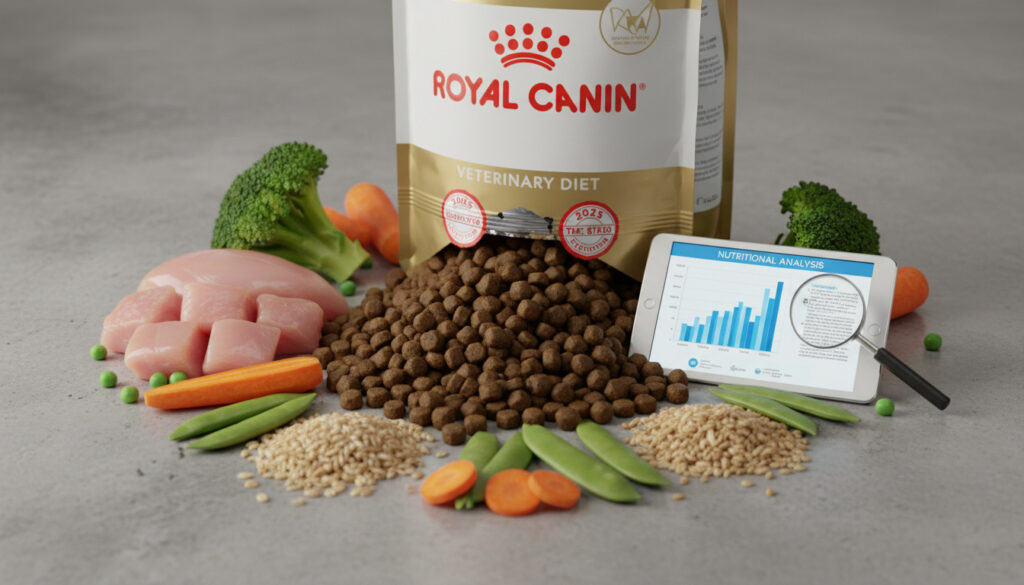
Royal Canin Dog Food – 2025 Ingredients Safety Analysis
Royal Canin occupies a distinct position in the pet food industry, commanding premium prices while utilizing ingredients that independent reviewers classify as mid-tier. The French-founded brand, now owned by Mars Petcare, generates consistent debate among veterinary professionals and nutritionists regarding whether its science-backed formulations justify the cost and composition. This analysis examines the 2025 landscape of Royal Canin products, from breed-specific lines to prescription veterinary diets, based on independent testing, clinical assessments, and documented safety records.
The brand maintains a paradoxical reputation. Dog Food Advisor assigns consistent 3-star ratings to Royal Canin’s breed-specific adult formulas, citing below-average meat content and reliance on plant-based protein boosters. Yet Pet Care Partners rank these same products among the best dog foods of 2025-2026, particularly for picky eaters and animals with specific health conditions. This divergence stems from differing evaluation criteria: ingredient sourcing versus clinical nutritional outcomes.
Founded in 1968 by veterinarian Jean Cathary, Royal Canin built its identity on precision nutrition tailored to specific physiological profiles rather than generalized “natural” marketing. The company produces over 100 distinct formulas targeting breed-specific morphologies, size categories, and medical conditions ranging from gastrointestinal sensitivity to renal disease. Independent analysis reveals formulas heavy in chicken by-product meal, brewers rice, and corn gluten meal—ingredients that lower biological value ratings while maintaining AAFCO nutritional compliance.
Is Royal Canin a Good Dog Food Brand?
Premium veterinary and breed-specific nutrition with research-driven formulation
High veterinary recommendation rates for targeted health management and palatability
Mid-tier classification due to by-product meals and grain dependency
3 out of 5 stars from Dog Food Advisor for breed-specific lines
- Ingredient versus outcome: Reviewers note heavy use of chicken by-product meal and corn gluten meal, yet veterinarians report reliable clinical results for digestive and dermatological conditions.
- Breed customization: The brand offers 30+ breed-specific dry formulas addressing unique physiological traits from jaw structure to digestion speed.
- Veterinary trust: Consistently ranked among top 2025-2026 veterinary recommendations for prescription and therapeutic diets.
- Palatability factor: Formulations demonstrate higher acceptance rates among picky eaters compared to premium whole-meat competitors.
- Grain-inclusive only: No grain-free options exist in the current lineup, utilizing brewers rice and barley as primary carbohydrates.
- Pricing premium: Costs significantly exceed standard commercial kibble, particularly for veterinary prescription lines.
- Safety standing: No documented recalls in 2025; historical issues predate current manufacturing protocols.
| Attribute | Specification |
|---|---|
| Founded | 1968, Aimargues, France |
| Founder | Jean Cathary, DVM |
| Parent Company | Mars Petcare (acquired 2002) |
| Formula Range | 100+ breed, size, and health-specific options |
| Primary Proteins | Chicken by-product meal, corn gluten meal, hydrolyzed soy |
| Carbohydrate Sources | Brewers rice, barley, corn, natural flavors |
| Typical Analysis (Dry Matter) | 30% protein, 12% fat, 51% carbohydrates |
| Independent Rating | 3/5 stars (Dog Food Advisor) |
| Veterinary Ranking | Top 2025-2026 pick for breed-specific needs (Pet Care Partners) |
| Price Tier | Premium ($3-5 per pound retail; $84-99 for prescription cases) |
| Recall History | No 2025 events; pre-2025 historical issues only |
| Grain Status | Exclusively grain-inclusive formulas |
Royal Canin Dog Food Ingredients and Safety
Ingredient Composition Analysis
Royal Canin formulates for nutritional precision rather than ingredient marketing. Chicken by-product meal—a rendered concentrate of slaughterhouse waste including organs and bones—typically appears as the primary protein source, delivering high protein concentration at lower biological value than whole meats. Brewers rice, a milled grain by-product of negligible nutritional density, and corn gluten meal, a 60% protein concentrate with lower amino acid bioavailability than animal sources, constitute the bulk of caloric content in many formulas.
The breed-specific adult line averages 30% protein, 12% fat, and 51% carbohydrates on a dry matter basis, translating to a calorie-weighted profile of 27% protein, 26% fat, and 47% carbohydrates. This 60% fat-to-protein ratio indicates moderate meat content supplemented heavily by plant-based protein boosters. Specialty veterinary lines diverge significantly: the Gastrointestinal Low Fat formula contains just 20% protein and 5% fat utilizing pork digest and barley, while the Hydrolyzed Protein formula employs 19% protein and 17% fat from hydrolyzed soy isolate for allergic animals.
Safety Verification and Recall Status
Current safety data reveals no recalls for Royal Canin products in 2025. The brand maintains nutritional adequacy testing protocols that satisfy veterinary trust standards, though specific 2025 testing data remains unpublished in public records. Historical recall events predate the current manufacturing era under Mars Petcare ownership, with the most significant industry-wide issues occurring during the 2006-2007 melamine contamination period.
ConsumerAffairs documentation indicates occasional quality control concerns regarding by-product sourcing consistency, though no widespread safety violations appear in recent monitoring. The 2025 introduction of a fresh food line generated criticism focused exclusively on pricing accessibility rather than safety or nutritional adequacy.
Independent reviewers classify Royal Canin as below-average for ingredient quality due to reliance on by-products and grains, yet veterinary professionals consistently report clinical efficacy for targeted health management. This disparity highlights the distinction between ingredient sourcing standards and nutritional outcome validation.
Why Is Royal Canin Dog Food So Expensive?
Veterinary Diet Pricing Structure
Prescription formulas command significant premiums, with cases of Gastrointestinal Low Fat or Hydrolyzed Protein wet and dry combinations retailing between $84 and $99. These costs reflect clinical testing requirements, veterinary distribution channels, and specialized manufacturing processes for therapeutic nutrient profiles. Unlike over-the-counter premium brands, these formulas require documented clinical trials for efficacy claims in managing conditions like chronic diarrhea or protein allergies.
Breed-Specific Research Costs
The development of 30+ breed-specific formulas necessitates research into morphological variations—kibble shape adaptation for brachycephalic breeds like French Bulldogs versus large-bite designs for German Shepherds—along with metabolic studies tracking nutrient absorption across different genetic profiles. These research investments, combined with lower production volumes per formula compared to mass-market all-breed foods, drive per-unit costs higher than standard commercial kibble.
The 2025 launch of Royal Canin fresh food drew criticism from veterinary nutritionists who characterized the pricing structure as a “ticking time bomb” for household budgets. While the product meets nutritional standards, the cost barrier may limit accessibility for owners seeking fresh alternatives to kibble.
When evaluating dietary investments, pet owners should consider whether specialized nutritional targets justify the expenditure. For animals with specific pathologies, the Can Dogs Eat Mushrooms – Safe Types, Toxic Risks, Vet Guide offers context on how targeted dietary management compares to whole-food approaches for sensitive animals.
Best Royal Canin Formulas and Comparisons
Clinically Recommended Formulations
Veterinary consensus identifies several standout formulas. The Labrador Retriever Adult addresses breed-specific propensity for weight gain through controlled fat content and kibble design promoting slower ingestion. The Chihuahua Adult accommodates small jaw structures and high metabolism requirements. For medical conditions, the Gastrointestinal Low Fat formula supports pancreatic insufficiency and chronic digestive disorders, while the Hydrolyzed Protein line serves as the elimination diet standard for adverse food reactions.
Competitive Positioning
Royal Canin competes primarily with Hill’s Science Diet and Purina Pro Plan in the veterinary recommendation space. While Hill’s matches Royal Canin in clinical validation for therapeutic diets, Royal Canin distinguishes itself through breed-specific customization where Hill’s focuses on size and life-stage categories. Purina offers less specialization but competes aggressively on price point, typically undercutting Royal Canin by 20-30% in retail channels.
| Criteria | Royal Canin | Hill’s Science Diet | Purina Pro Plan |
|---|---|---|---|
| Specialization | 30+ breed-specific plus medical formulas | Size/life-stage plus medical formulas | Activity level and basic medical formulas |
| Ingredient Tier | Mid-tier (by-products, grains) | Mid-to-high tier | Variable by sub-brand |
| Veterinary Recommendation | High for specific conditions | High for general and medical | Moderate to high |
| Price Position | Premium ($3-5/lb) | Premium ($2.50-4.50/lb) | Moderate ($2-3.50/lb) |
| Grain Options | None (all grain-inclusive) | Limited grain-free available | Grain-free and grain-inclusive |
Veterinary nutritionists recommend selecting breed-specific formulas only when documented physiological differences—such as jaw morphology, digestive transit time, or skin pH—warrant targeted nutrient profiles rather than selecting based on marketing alignment alone.
The specialized labor market for veterinary nutritionists parallels the premium positioning of these brands; the Highest Paying Jobs in Canada – 2025 Salaries and Rankings illustrates how specialized expertise commands premium compensation in professional fields.
Royal Canin History and Safety Milestones
- : Jean Cathary, a French veterinarian, establishes Royal Canin in Aimargues, France, focusing on nutritional science over ingredient trends.
- : Mars Petcare acquires Royal Canin, integrating the brand into global distribution networks while maintaining independent research facilities.
- : Industry-wide melamine contamination affects multiple pet food manufacturers; Royal Canin implements enhanced testing protocols in subsequent years.
- : Expansion of veterinary prescription lines including renal support, hydrolyzed protein, and gastrointestinal formulas requiring clinical validation.
- : Launch of fresh food product line generates market debate regarding pricing sustainability despite nutritional adequacy.
Established Facts and Persistent Uncertainties
Clinically Verified
- Breed-specific formulas demonstrate measurable differences in palatability and acceptance among targeted demographics
- Hydrolyzed protein and gastrointestinal prescription lines achieve documented clinical outcomes for food allergies and digestive pathologies
- Manufacturing safety protocols meet veterinary trust standards with consistent nutritional adequacy testing
- Fat-to-protein ratios and carbohydrate content remain consistent with label guarantees across independent analyses
Requiring Further Evidence
- Long-term health outcomes comparing by-product-based diets to whole-meat formulations remain unstudied in peer-reviewed literature
- Individual tolerance variability for corn gluten meal and brewers rice across different genetic lineages lacks comprehensive mapping
- 2025-specific recall data remains preliminary; ongoing monitoring required for definitive safety assessments
- Economic sustainability of fresh food lines for average consumers requires longitudinal market analysis
The Research Philosophy Behind the Brand
Royal Canin’s operational model prioritizes nutritional biochemistry over ingredient sourcing aesthetics. The company maintains that biological value and digestibility matter more than the perceived quality of raw inputs—a position that generates friction with consumer preferences for human-grade meat sourcing. This philosophy stems from founder Jean Cathary’s original veterinary practice, where he observed that precise nutrient profiles often resolved clinical symptoms that ingredient-quality-focused diets could not address.
The brand’s acquisition by Mars Petcare in 2002 expanded research capabilities while introducing corporate manufacturing efficiencies. Current formulations reflect decades of accumulated data on breed-specific metabolic rates, urinary pH requirements, and digestive transit times. However, critics argue that this scientific approach masks the use of lower-cost agricultural by-products that reduce manufacturing expenses while maintaining premium retail pricing.
Expert Assessments and Veterinary Perspectives
“If your vet suggested prescription, it’s likely Royal Canin.”
— Pet Care Partners, 2025 Veterinary Recommendations
“Below-average dry product per ingredient quality, but science-backed for targeted health.”
— Dog Food Advisor, Breed Health Nutrition Analysis
“The 3-star rating reflects grain dependency and by-product usage, yet the clinical results for digestive and dermatological cases remain consistent.”
— Great Pet Care, Veterinary Nutrition Review
Assessment Summary
Royal Canin delivers clinically validated, breed-specific nutrition that commands premium pricing justified primarily for animals with specific pathological or physiological needs rather than general maintenance. The brand’s reliance on by-products and grains yields mid-tier independent ratings despite high veterinary confidence in therapeutic outcomes. For owners prioritizing ingredient sourcing transparency over nutritional biochemistry, alternatives may offer better alignment with values, but for managing specific health conditions under veterinary supervision, Royal Canin maintains a validated position in the 2025 market. Those exploring dietary options for sensitive animals may find additional context in the Can Dogs Eat Mushrooms – Safe Types, Toxic Risks, Vet Guide for understanding how specific nutritional interventions support animal health.
Common Questions
Is Royal Canin completely grain-free?
No. Royal Canin does not produce grain-free formulas. All product lines utilize grain ingredients including brewers rice, barley, and corn as primary carbohydrate sources.
Can prescription formulas be purchased without veterinary authorization?
Royal Canin veterinary diet lines require veterinary approval for purchase through authorized retailers. Over-the-counter breed and size-specific formulas do not require prescriptions.
How long does a standard bag last for a medium-sized dog?
A 30-pound bag typically feeds a 50-pound dog for approximately 30-35 days depending on activity level and specific caloric density of the formula selected.
Are there whole-food alternatives to Royal Canin’s veterinary diets?
While fresh and whole-food diets exist, veterinary prescription formulas from Royal Canin undergo clinical testing for specific pathologies that homemade alternatives cannot replicate without veterinary formulation.
Does the company conduct animal testing?
Royal Canin maintains research facilities where feeding trials observe palatability, digestibility, and clinical outcomes, following industry standards for veterinary nutritional research.
Why do some formulas contain corn gluten meal?
Corn gluten meal provides a concentrated 60% protein source that boosts total protein content economically, though it offers lower biological value than animal-based proteins.
More related posts
 Criminal Minds Season 19: Status, Cast, and Everything We Know
 Aerosmith Steven Tyler: Health, Family, Net Worth Updates
 Teddy Swims: Biography, Wife, Face Tattoos, and Music Career
 Black Friday Sales Canada 2025: Dates, Deals & Comparisons
 Jasprit Bumrah: Injury, Net Worth, Stats & Life Story
 How to Make Caramel: Wet, Dry & Condensed Milk Methods
 AI Chatbot Guide: Free Options, Types, Safety & Top Picks 2026
 How Long Is a Cold Contagious? Timeline and Stages
