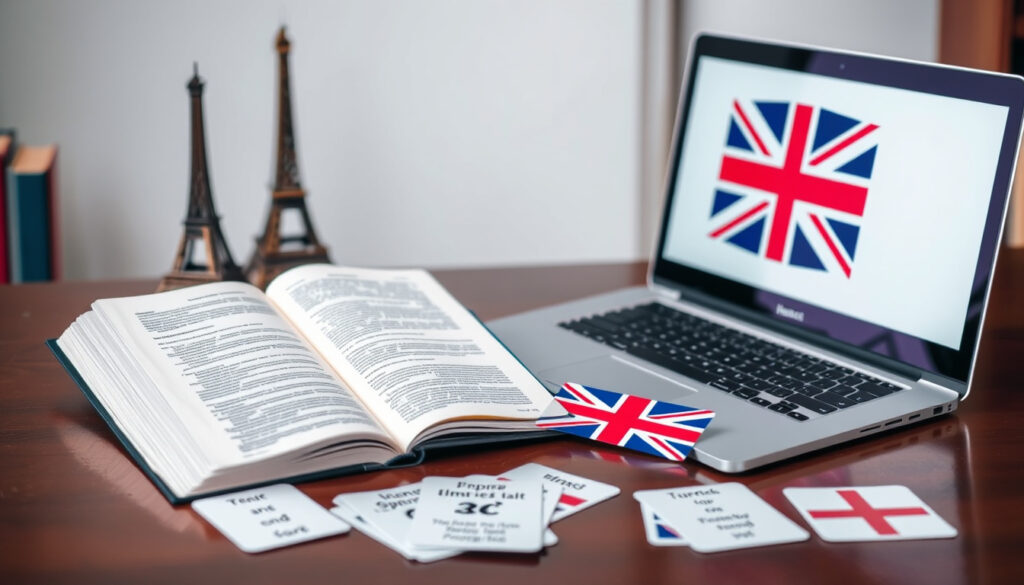
French to English Translate: Tools, Phrases & Guide
Anyone who’s tried muddling through a French conversation with a phone held at an awkward angle already knows—getting the right translation matters more than the tool you use. The good news is the best options are free, and phrases you’d actually use are easier to master than they look on paper. Below is a phrase-by-phrase breakdown, pronunciation tips, and how the top translators stack up against each other.
Languages supported by Google Translate: Over 100 ·
QuillBot free character limit: 5,000 ·
Top translators ranked: 5 major services ·
Audio pronunciation: Available on Collins
Quick snapshot
- DeepL released 2017, ranks among top tools (Copycat Cafe)
- QuillBot free plan: 5,000 characters, no ads (QuillBot)
- Spoken French glides “Je” to “sh” sound (FrenchToday)
- Exact accuracy rates across regional dialects
- Head-to-head benchmarks with published metrics
- Audio samples from primary sources for all phrases
- DeepL: French-English among top pairs (DeepL)
- Google Translate: 100+ languages, free instant (Wikivoyage phrasebook)
- Collins: Example sentences plus audio playback (Wikivoyage phrasebook)
- Translation AI keeps improving in nuance
- Spoken French shortcuts save travelers time
- Audio guides fill the gap textbooks leave
| Label | Value |
|---|---|
| Primary tool | Google Translate |
| Most accurate alternative | DeepL |
| With audio | Collins Dictionary |
| Phrase examples | Reverso |
| Free with no ads | QuillBot (5,000 chars) |
| Regional French tips | Wikivoyage Phrasebook |
What does “à côté de” mean?
This is one of the most-searched French prepositions in English, and it’s simpler than it looks. “À côté de” translates directly to “next to” or “beside”—describing where something sits in relation to something else. Whether you’re asking for directions in Paris or describing furniture layout, this phrase covers the job.
Pronunciation guide
The phrase breaks into three parts: ah soh-tay duh. Say it aloud a few times and the sounds start to click. The key is the “é” in côté, which carries a sharp “ay” rather than a soft “e.” If you’re using a tool like Wikivoyage’s French phrasebook (an open-reference pronunciation guide), you’ll find IPA breakdowns that map every sound.
Common usage examples
- “La bibliothèque est à côté de l’école.” (The library is next to the school.)
- “Je suis à côté de toi.” (I’m next to you.)
The implication: most translators handle this phrase correctly, but context matters. Tools like Reverso show how “à côté de” behaves differently when used figuratively (meaning “compared to”), so checking multiple sources helps you pick the right English equivalent.
For travelers, “à côté de” pops up in practical contexts — finding landmarks, navigating transit, or directing a taxi. Learning this one preposition covers far more ground than memorizing a dozen separate vocabulary words.
What is “I love you” in French Canadian?
In standard French, “I love you” is “Je t’aime” — two words that roll off the tongue once you nail the pronunciation (zhuh tuhm). But Canadian French brings its own flavor to this phrase, and the spelling stays the same while some sounds shift.
Standard vs Canadian variants
Quebec French often softens certain vowels, and the “u” sound sometimes lands closer to “eu” than the tight “oo” you’d hear in Parisian French, according to Wikivoyage’s regional guide (open-reference language resource). The phrase “Je t’aime” itself doesn’t change — the regional flavor shows up in pronunciation, not vocabulary. If you’re using a translator app to prepare for a trip to Montreal, double-check the audio sample to hear how locals actually say it.
Pronunciation audio
Several sources provide audio clips, including IE Languages (native-speaker phrase library), which records basic phrases with clear enunciation. For Quebec-specific audio, language learning platforms like Memrise sometimes include regional variants in their French courses.
The pattern: most translation tools give you the standard form, which works perfectly in Quebec. Regional pronunciation varies but rarely causes confusion — “Je t’aime” is universal French for romantic affection.
Takeaway: Quebec travelers get the same phrase but should listen to local audio to nail the softer vowel sounds.
How do you say orange in French?
This is one of those delightful quirks where French and English overlap. The French word for orange is “orange” — spelled and pronounced almost the same way, whether you’re talking about the fruit, the color, or the juice. Google Translate handles this one instantly and accurately.
Google Translate result
- Fruit: “orange” → “orange”
- Color: “orange” → “orange”
- Context rarely changes the translation
Contextual uses
The only wrinkle comes with idiomatic expressions. “L’orange” (the orange, as a noun) vs. “la couleur orange” (the color orange) — both use the same base word. Wikivoyage notes that French keeps loanwords intact more often than other languages, so English speakers get a break here.
What this means: for this particular word, you can skip overthinking. Drop it into any translator, free or paid, and you’ll get the right answer. The real pronunciation challenge lies in French sounds that don’t exist in English — which brings us to the next section.
What is French slang for shut up?
Sometimes you need the informal version. French has two main ways to tell someone to be quiet: “Ferme-la!” (fer-muh lah) and “Tais-toi!” (tay twah). Both are direct, one is slightly harsher, and context determines which fits better.
Common expressions
- “Ferme-la!” — literally “close it,” used when someone’s talking too much. Blunt but not offensive in casual settings.
- “Tais-toi!” — “be silent,” slightly softer, works in firm-but-friendly situations.
- “Arrête de parler!” — “stop talking,” a step up in directness.
Politeness levels
According to FrenchToday (specialized spoken French resource), these expressions belong to informal, spoken French — not something you’d use in a business meeting or with a stranger. In a casual bar in Lyon or Marseille, “Ferme-la!” lands fine. In a professional setting, silence or a polite “s’il vous plaît” works better.
The catch: learning slang helps you understand native speakers, but dropping these phrases in the wrong context creates awkwardness. Most translation tools show the literal meaning without flagging the register — so pay attention to the social setting before using them.
Is it polite to say “de rien”?
Yes — and it’s the standard response to “merci” (thank you) in most French-speaking places. “De rien” (duh ree-ehn) means “it’s nothing” or “you’re welcome,” and it fits everyday interactions perfectly. No need to overthink it.
Response to merci
Here’s the breakdown: when someone says “merci” to you, the polite reply is “de rien.” Say it in a shop, a café, or after someone holds a door — you’ll sound natural. The alternative “je vous en prie” (zhuh voo zahn pree) works too, but “de rien” is simpler and more common in casual contexts.
Alternatives
- “Je vous en prie” — more formal, good for service encounters
- “Il n’y a pas de quoi” — informal, similar to “no problem”
- “De nada” — used in Spanish, not French
The implication: saying “de rien” when someone thanks you is not only polite — it’s the expected norm. Translation tools rarely explain etiquette context, so this is one of those cases where a quick phrase guide beats an app.
Travelers who master “merci” and “de rien” blend in better than those who skip the exchange entirely. Even if your accent isn’t perfect, the attempt at basic politeness signals respect — and French speakers notice.
How to Translate French to English: Step by Step
The process breaks into four moves: pick your tool, enter your text, check the output, and refine pronunciation if needed.
Step 1: Choose your translator
- Google Translate — free, instant, 100+ languages. Good for quick single phrases or sentences.
- DeepL — AI-powered, handles longer passages with better nuance. French to English is among its top language pairs, according to DeepL’s official site (translator provider).
- QuillBot — free up to 5,000 characters with no ads, supports 52 languages total. Ideal if you want to edit and cite sources post-translation.
- Collins Dictionary — example sentences and audio pronunciation included. Best for learners who want context beyond raw translation.
- Reverso — contextual translations, shows how phrases are used in real sentences. Useful for idiomatic expressions.
Step 2: Enter French text
Type or paste your phrase. For phrases like “à côté de” or “Je t’aime,” enter them exactly as written. Some tools auto-detect language, but selecting “French to English” manually reduces errors.
Step 3: Review the translation
Check whether the output matches your intended meaning. For high-stakes text (emails, documents), run the same phrase through two tools and compare results. According to Copycat Cafe (translation review), AI tools like ChatGPT, Google Translate, and DeepL all produced nearly perfect results in testing — but nuance matters, so human review still helps.
Step 4: Practice pronunciation
- Use audio-enabled tools like IE Languages (native-speaker audio library) or Collins Dictionary.
- Map English phonemes to French equivalents — FrenchPod101 (pronunciation guide) shows how [eɪ] in English maps to [e] in French.
- Remember spoken French shortcuts: “Je suis” becomes “shui,” and “Pas de problème” glides to “pad problem” in casual speech, per FrenchToday.
The implication: the best workflow combines two tools — one for accuracy (DeepL or Google Translate) and one for pronunciation (Collins or IE Languages). No single app covers both perfectly, but pairing them takes two minutes and gets you further than relying on one.
Takeaway: Pair a translation tool with a pronunciation resource for the most effective French practice session.
Confirmed facts
- DeepL launched in 2017, French-English among top pairs
- QuillBot free plan: 5,000 characters, no ads
- French “u” sound maps to IPA y (tight “oo”)
- Spoken French glides “Je” to “sh” sound
- Bonjour means Hello / Good day / Good morning
- Collins Dictionary includes example sentences plus audio
What’s unclear
- Exact accuracy rates across French dialects
- Published head-to-head benchmarks with metrics
- Audio samples from primary sources for all phrases
- Full comparison with Microsoft Translator or Apple Translate
What experts say
“ChatGPT, Google Translate and DeepL Translator did the best job, by including subtle touches like a filler word.”
— Copycat Cafe (Translation Review)
“The best way to learn the right French pronunciation is to learn it in the context of a story.”
— FrenchToday (Language Instructor)
Bottom line
For most people who need French to English translation, Google Translate handles quick phrases well while DeepL edges it out on nuance for longer text. QuillBot covers the free, ad-free middle ground, and Collins Dictionary fills the gap when you need audio. The real skill isn’t finding the perfect tool — it’s knowing what each one does well and pairing two when it counts.
Related reading: How to Translate Greek to English: Best Free Methods
Related coverage: Google vs DeepL comparison fördjupar bilden av French to English: Best Translators Compared (Google, DeepL).
Frequently asked questions
How accurate is French to English translation?
Modern AI translators like DeepL and Google Translate achieve high accuracy on common phrases and sentences. Testing shows nearly perfect results for everyday text, though subtle nuances or regional slang may still trip up even the best tools. For important documents, a second opinion from another tool helps.
What is the best free French translator app?
Google Translate covers 100+ languages for free with instant results. QuillBot offers a free tier up to 5,000 characters with no ads. DeepL has a free web version with character limits, and Collins Dictionary provides free example sentences plus audio. The best choice depends on whether you need audio, document translation, or simple phrase lookups.
Does Google Translate handle French slang?
Google Translate handles standard French well. For slang like “Ferme-la!” or “Tais-toi!”, it usually provides an accurate literal translation but may not flag the informal register. Use a phrase guide or secondary source like FrenchToday to check context before using slang in social situations.
How to translate French sentences with audio?
Collins Dictionary and IE Languages both provide audio playback for common phrases. Enter your French text into Google Translate or DeepL, then cross-reference the pronunciation with these audio-enabled resources. FrenchPod101 also maps phonemes for learners who want to understand the mechanics.
What are common French response phrases?
“De rien” (you’re welcome) responds to “merci.” “À plus!” means “see you later.” “Bonjour” covers hello, good morning, or good day depending on time of day. These five phrases cover most casual interactions travelers encounter in France.
Is DeepL better than Google for French?
According to reviews and DeepL’s own documentation, French to English is among its strongest language pairs, and many testers rate its nuance higher than Google Translate. Google Translate covers more languages and works offline, so the “better” choice depends on your priority: nuance (DeepL) or breadth (Google).
How to pronounce French phrases correctly?
Map English phonemes to French equivalents, practice liaison rules (like “Il habite à Paris” as [ilhabitapari]), and listen to native audio. The “u” in French uses a tight “oo” with pursed lips (IPA: y), and spoken French often glides sounds that look separate on paper. Audio guides from FrenchToday and IE Languages help bridge the gap between written and spoken French.
More related posts
 5 5 Feet in CM – Exact Conversion to 167.64 Centimeters
 Bitcoin Price CAD Today: Live Rate, High, and Insights
 How to Make Caramel: Wet, Dry & Condensed Milk Methods
 Princess Auto St Jerome – Hours, Address, Phone and Reviews
 What Is a Therian? Definition, Meaning & Misconceptions
 55 CAD to USD: Current Rate 0.7314 (40.23 USD)
 AI Image Generator from Image: Free Tool Compared
 Automobile En Direct Gatineau – Used Car Dealer Facts and Hours
