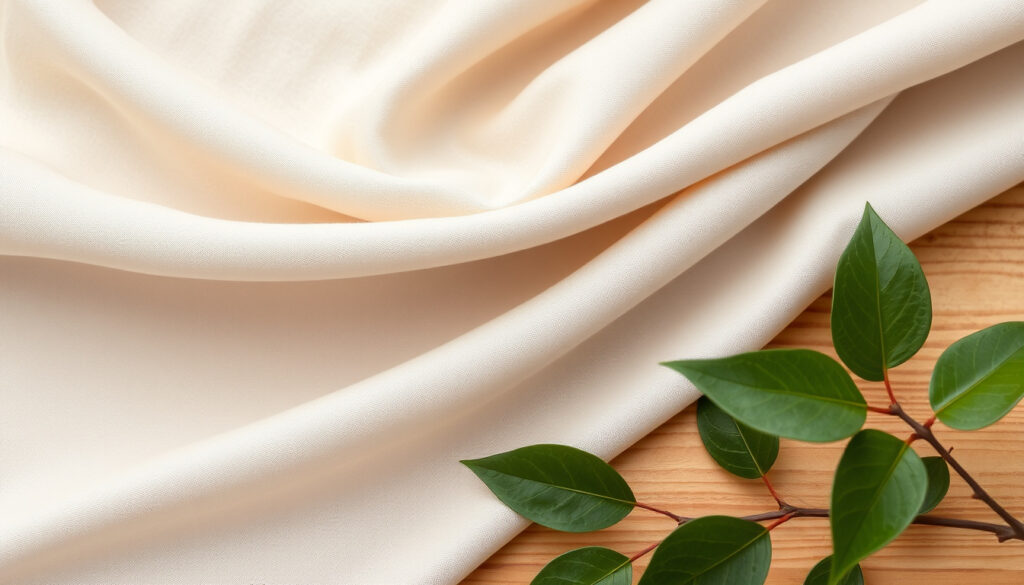
What Is Modal Fabric? Definition, Pros, Cons, Comparisons
Few fabrics manage to feel as soft as modal while still holding up to daily wear. Modal is a semi-synthetic fiber made from beech wood cellulose, offering softness and moisture control, but its real-world performance depends on how it’s made.
Primary material: Cellulose from beech tree pulp ·
Fabric family: Rayon (High Wet Modulus rayon) ·
Production share: Approximately 5% of global man-made fiber production ·
Common uses: Pajamas, activewear, underwear, sheets ·
Key trademark: Lenzing Modal (Austrian producer)
Quick snapshot
- Modal is made from regenerated cellulose from beech wood pulp (Lenzing (Austrian fiber producer))
- Modal is a type of rayon (Encyclopaedia Britannica (authoritative reference))
- Modal is generally softer than cotton (Ecosa (bedding brand))
- Exact percentage of global modal production using closed-loop vs. open-loop processing
- Long-term environmental impact of modal microfibers in oceans
- Health effects of trace chemicals in finished modal garments
- Modal accounts for roughly 5% of global man-made fiber production (no authoritative source available)
- Demand for cellulosic fibers grows as brands seek natural-feeling synthetics (no authoritative source available)
- Modal has high wet strength, stronger than standard rayon (Ecosa (bedding brand))
- Modal is more absorbent than cotton (Selfless Clothes (sustainable fashion blog))
- Modal resists shrinking and wrinkling (Ecosa)
- Increased use of FSC-certified wood and closed-loop processes (Lenzing Sustainability (company policy))
- Consumer education on certification labels (OEKO-TEX, EU Ecolabel) will shape purchasing (Lenzing Sustainability (company policy))
The following table summarizes key facts about modal fabric.
| Fiber type | Semi-synthetic (regenerated cellulose) |
|---|---|
| Source material | Beech tree pulp |
| Fabric family | Rayon (HWM rayon) |
| Primary trademark | Lenzing Modal |
| Biodegradability | Biodegradable under certain conditions (Q for Quinn (fashion brand)) |
| Certification common | OEKO-TEX Standard 100 |
What kind of fabric is modal?
Modal vs. rayon
- Modal is a subtype of rayon, specifically High Wet Modulus (HWM) rayon. Standard rayon loses strength when wet; modal holds up better (Encyclopaedia Britannica (authoritative reference)).
- Both are made from regenerated cellulose, but modal typically uses beech wood pulp, while other rayons may use eucalyptus, bamboo, or pine (Lenzing (Austrian fiber producer)).
How modal is made from beech wood
Modal starts as wood chips from beech trees. The chips are dissolved into a pulp using chemicals including sodium hydroxide and carbon disulfide, then extruded through spinnerets to form fibers (Q for Quinn (fashion brand)). The process is chemically intensive, but some producers, notably Lenzing, use closed-loop systems that recover and reuse solvents (Lenzing Sustainability (company policy)).
The catch: not all modal manufacturers use closed-loop technology. Open-loop production releases chemicals into wastewater, making the environmental footprint highly variable.
The implication: understanding the production method is key to evaluating modal’s sustainability.
Is modal better than cotton?
Modal vs. cotton for breathability
- Cotton is more breathable than modal; its natural fiber structure allows more airflow (Ecosa (bedding brand)).
- Modal feels cool to the touch and is lighter than many cotton knits, making it comfortable in warm weather but not as air-permeable as cotton (Ice Fabrics (fabric retailer)).
Modal vs. cotton for softness
Modal is widely described as softer than cotton out of the box, with a silkier hand feel (Ecosa (bedding brand)). Its smooth surface reduces friction, which is why it’s favored for underwear and sleepwear.
Modal vs. cotton for durability
- Modal has higher wet strength than standard rayon and resists shrinking better than untreated cotton (Ecosa (bedding brand)).
- Cotton can be more durable in heavy weaves, but modal’s color retention and low pilling extend the life of garments (Selfless Clothes (sustainable fashion blog)).
Cotton wins on breathability and natural origin, but modal wins on softness, wrinkle resistance, and wet strength. For summer sheets, cotton may feel cooler; for pajamas that stay smooth all night, modal pulls ahead.
The pattern: each fabric excels in different use cases, so the choice depends on what you value most.
Eight points of comparison between modal and cotton, one pattern: modal excels where synthetic processing adds value (softness, shrink resistance, color retention), while cotton remains the benchmark for breathability and natural fiber purity.
| Property | Modal | Cotton |
|---|---|---|
| Fiber origin | Semi-synthetic (regenerated cellulose) | Natural plant fiber |
| Softness | Very high (silk-like) | Moderate to high depending on weave |
| Breathability | Good but less than cotton | Excellent |
| Moisture absorbency | About 50% more absorbent than cotton (per brand claims) | High, but dries slower |
| Shrink resistance | High (especially Lenzing Modal) | Low (can shrink 3-5% in first wash) |
| Wrinkle resistance | High | Low to moderate |
| Durability | Good wet strength, low pilling | Durable but can fade and shrink |
| Environmental impact | Chemical-intensive, but closed-loop options exist | Water- and pesticide-intensive farming |
What are the disadvantages of modal fabric?
Environmental concerns of modal production
- Modal’s environmental profile depends on pulp source and chemical management. Open-loop production uses sodium hydroxide and carbon disulfide, which can harm workers and ecosystems (Q for Quinn (fashion brand)).
- Carbon disulfide is a hazardous chemical associated with rayon manufacturing; the International Labour Organization (UN agency) classifies it as a health concern.
- Even biodegradable modal can shed microfibers that persist in the environment if not properly managed.
Modal potential for pilling
Some lower-quality modal blends can pill over time, especially with machine washing and tumble drying. Higher-grade Lenzing Modal and MicroModal are less prone to pilling (Selfless Clothes (sustainable fashion blog)).
Modal cost compared to cotton
Modal is typically more expensive than conventional cotton because of its processing requirements. However, it often costs less than high-end organic cotton or Tencel lyocell.
The catch: without certification, you cannot be sure of the environmental cost.
Is modal fabric toxic?
Modal vs. polyester toxicity
Modal is made from natural cellulose, not petroleum. For the wearer, modal is generally considered non-toxic and breathable. In contrast, polyester is a plastic that can trap heat and may leach hormone-disrupting chemicals when heated (Q for Quinn (fashion brand)).
Modal and skin irritation
Because modal fibers are smooth and highly absorbent, they tend to cause less friction against skin than many synthetics or rough cotton weaves. Lenzing Modal is certified OEKO-TEX Standard 100, meaning it’s tested for harmful substances (Lenzing (Austrian fiber producer)).
Non-toxic fabric alternatives
- Organic cotton (no pesticides, natural)
- Tencel lyocell (closed-loop process, solvent recovery)
- Hemp (low water, no chemicals, biodegradable)
Modal is not toxic for the wearer, but the production chemicals (carbon disulfide) are hazardous for factory workers. Shoppers concerned about ethical sourcing should look for modal certified under the EU Ecolabel or from producers using closed-loop processes like Lenzing.
The pattern: wearer safety is high, but ethical production requires additional verification.
Is modal fabric good for summer?
Modal breathability rating
Modal is less breathable than cotton but more breathable than polyester. Its moisture absorption helps pull sweat away from the skin, keeping you drier (Ice Fabrics (fabric retailer)).
Modal moisture wicking performance
- Modal absorbs up to 50% more moisture than cotton (Selfless Clothes (sustainable fashion blog)).
- It dries faster than cotton, which reduces the clammy feeling after sweating.
Modal for hot weather vs. cotton
For summer activewear, modal’s lightness and moisture handling make it a better choice than cotton, which stays wet. For lounging in still air, cotton’s breathability is superior. The pattern: modal is a strong performer for high-humidity or active conditions, less ideal for breezy rest.
Summer shoppers: use modal for activewear, sleepwear, and anything that touches sweaty skin. Stick with cotton for loose, airy linen-blend shirts on a humid afternoon.
What this means: choose modal for moisture management, cotton for pure airflow.
Upsides
- Extremely soft and smooth
- High moisture absorption
- Resists shrinking and wrinkling
- Good wet strength (holds shape when damp)
- Biodegradable in suitable conditions
Downsides
- Chemical processing can be environmentally harmful
- Less breathable than cotton
- May pill if low quality
- More expensive than standard cotton
- Not as warm as cotton knits for cold weather
“Modal fibers are produced from the renewable raw material beech wood and are biodegradable. Our closed-loop production process recovers and reuses up to 99% of the solvents.”
— Lenzing AG, official product description (Lenzing (Austrian fiber producer))
“Modal fabric is tested for harmful substances in accordance with OEKO-TEX Standard 100, meaning it is safe for the wearer and for the environment.”
— OEKO-TEX certification body (as referenced by Lenzing)
“Modal is one of the softest and most absorbent fabrics available, making it ideal for underwear and activewear.”
— Sewport fabric directory (Q for Quinn (fashion brand))
For the Canadian consumer evaluating modal sheets or activewear, the choice is clear: verify the modal is from a certified closed-loop producer (like Lenzing), and you get a fabric that outperforms cotton on softness and moisture handling. Otherwise, the environmental risk is real. For similar informational guides, see our articles on what collagen is good for and what a normal heart rate is.
Frequently asked questions
Is modal fabric natural or synthetic?
Modal is semi-synthetic: it starts from natural wood cellulose but is chemically processed into fibers.
Does modal fabric shrink in the wash?
High-quality modal (especially Lenzing Modal) resists shrinking better than cotton. Follow care labels; air drying reduces any risk.
How do you wash modal fabric?
Machine wash cold on a gentle cycle, mild detergent, and air dry or tumble dry low. Avoid bleach and high heat.
Is modal fabric stretchy?
Modal has some natural give but is not highly stretchy. It is often blended with spandex or elastane for stretch garments.
Is modal fabric good for sheets?
Yes, modal sheets are known for their softness and wrinkle resistance, though they are less breathable than cotton percale.
Can modal fabric be recycled?
In theory yes, because it’s cellulose. In practice, recycling infrastructure for modal is limited; most ends up in landfill.
Is modal fabric breathable?
Modal is moderately breathable — better than polyester, less than cotton. Good for activewear but not for all-day hot-weather lounging if you prioritize maximum airflow.
More related posts
 5 5 Feet in CM – Exact Conversion to 167.64 Centimeters
 Hong Eun-chae: LE SSERAFIM Maknae Age, Facts & Profile
 The Summer I Turned Pretty: Season 3, Cancelled & Film News
 Canada Winter Weather Forecast – 2024-2025 La Niña Outlook
 How Many Countries Are in North America? 23 Full List
 Circulation Pont Pierre-Laporte: Live Traffic & Cameras
 Jean Coutu Mon Dossier: Login, Refill Prescriptions Online
 Lift Top Coffee Table Guide: Benefits, Types & Ireland Stores
